For graduate students, postdocs, and early‑career researchers
Get your next paper drafted and moving towards submission in 6 weeks

A live, cohort-based implementation program where you work on your manuscript step by step and get support for revisions over the next 3 months so it actually moves towards submission.
Introducing the Zero-To-Published Manuscript Writing Sprint
A 6-week implementation sprint with 3 months of follow-up Q&A, designed to help you turn your data into a real manuscript instead of another "work in progress".
Cohorts are small and run a few times per year. When you apply, I’ll confirm timing and place you in the next suitable cohort based on your project and schedule.
Outcome & value (for you)
One manuscript substantially drafted and moving toward submission this semester, not just “I’m still working on it.”
A repeatable writing workflow (figures → storyline → sections → revision plan) you can reuse for every future paper.
Less overwhelm and procrastination because you always know exactly what to work on next, each week.
Stronger CV and job/fellowship applications backed by real manuscripts and publications instead of unfinished projects.
A clearer, more structured draft so your PI’s feedback is about the science, not rewriting your text.
How it works
You get a simple structure and protected time to actually write your paper, not just hear about writing.
6 live implementation workshops (90 minutes each, over 6 weeks):
Each week, you'll work on your manuscript step by step
Week 1: Figures and storyline
Turn your results into clear figures and a coherent story for the paper.Week 2: Methods
Draft a solid Methods section that clearly documents what you did and supports reproducibility.Week 3: Introduction
Write an Introduction that frames the problem, the gap, and why this work matters.Week 4: Results and Discussion
Write the Results around your figures and a Discussion that interprets them without over‑claiming.Week 5: Finalizing the manuscript
Do final edits. Write the abstract, conclusion, and title. Finalize figures, supplements, and remaining details so the manuscript itself is complete.Week 6: Preparing for submission
Prepare your manuscript for submission, including final formatting and the cover letter, while building a simple system for timely submission and handling reviewer feedback.
3 monthly Manuscript Q&A clinics (60 minutes each)
For 3 months after the sprint, you can bring specific questions about:
Revisions and polishing
Co‑author / PI feedback
Journal choice, cover letters, and submission decisions
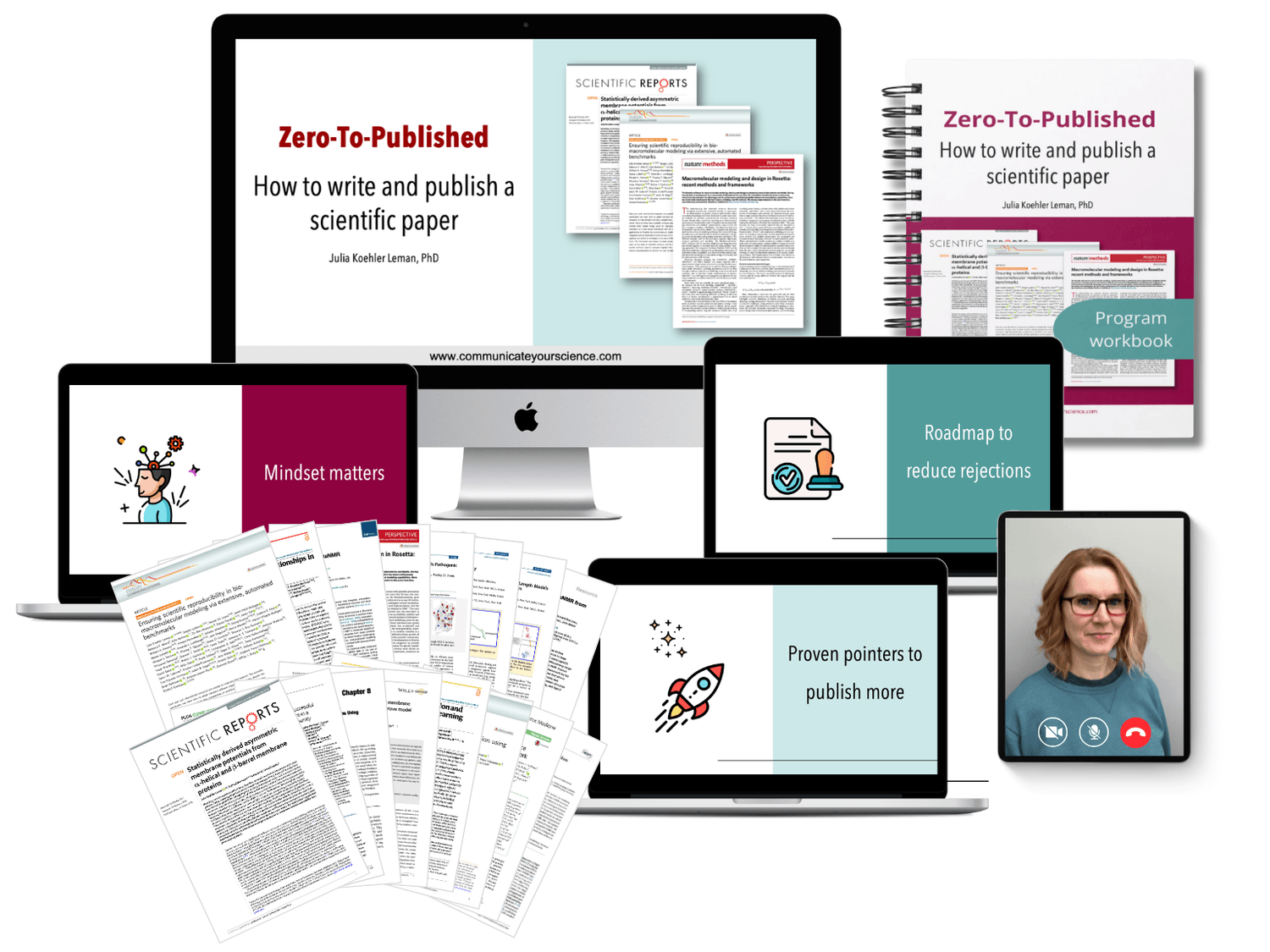
Access to the full Zero‑To‑Published Program
You also get the self‑paced curriculum with:
Short lessons on each manuscript section
Templates, checklists, and examples
Ongoing access so you can reuse the system for future papers
Cohorts are small and run a few times per year. When you apply, I’ll confirm timing and place you in the next suitable cohort based on your project and schedule.
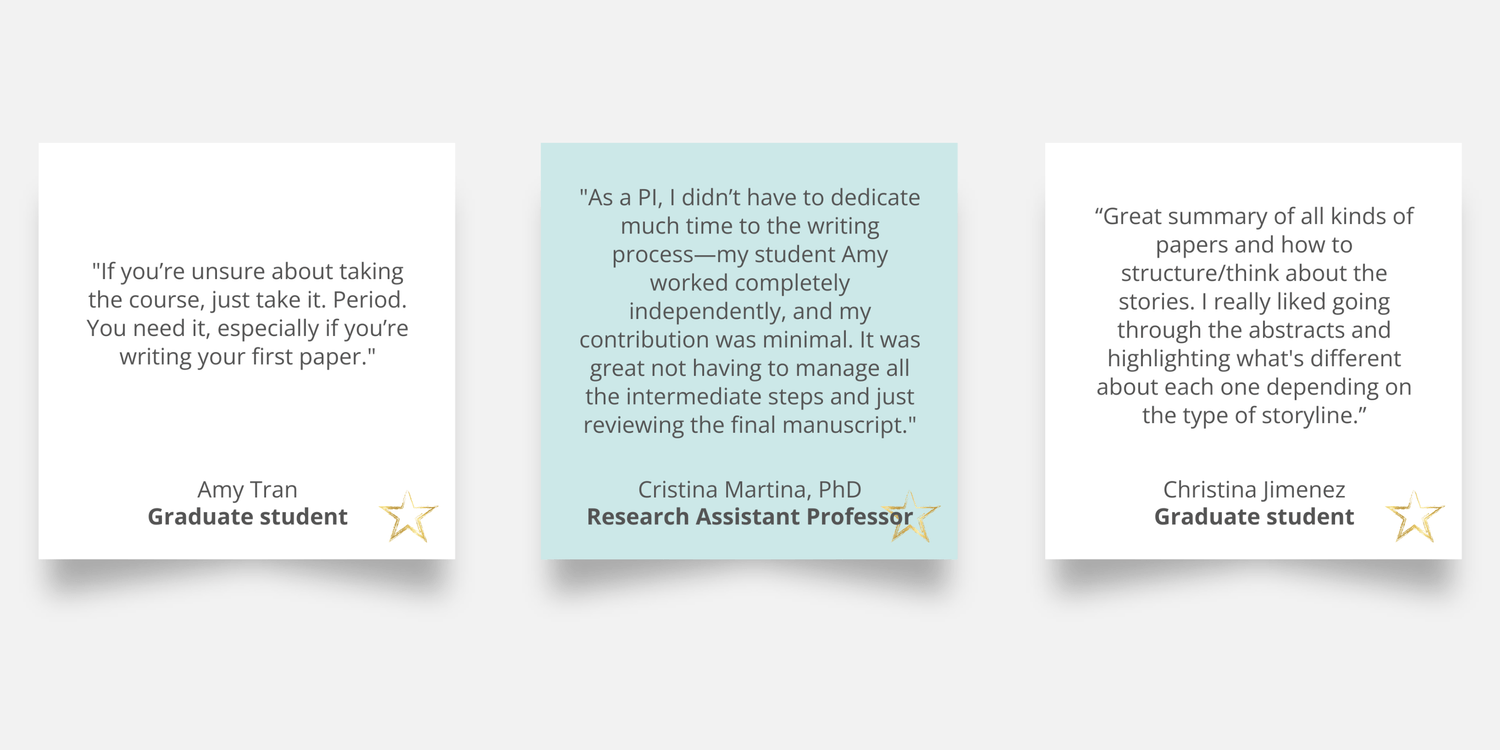
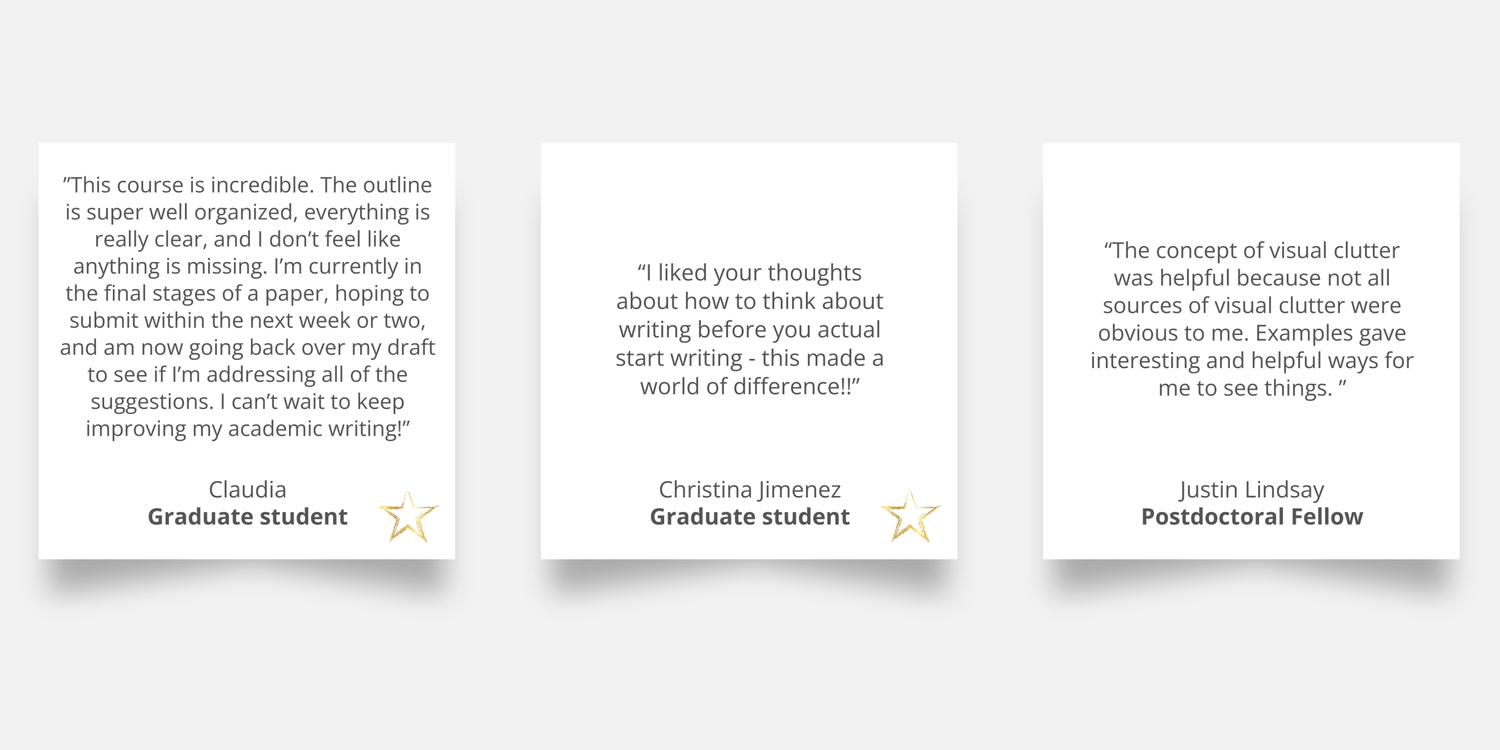
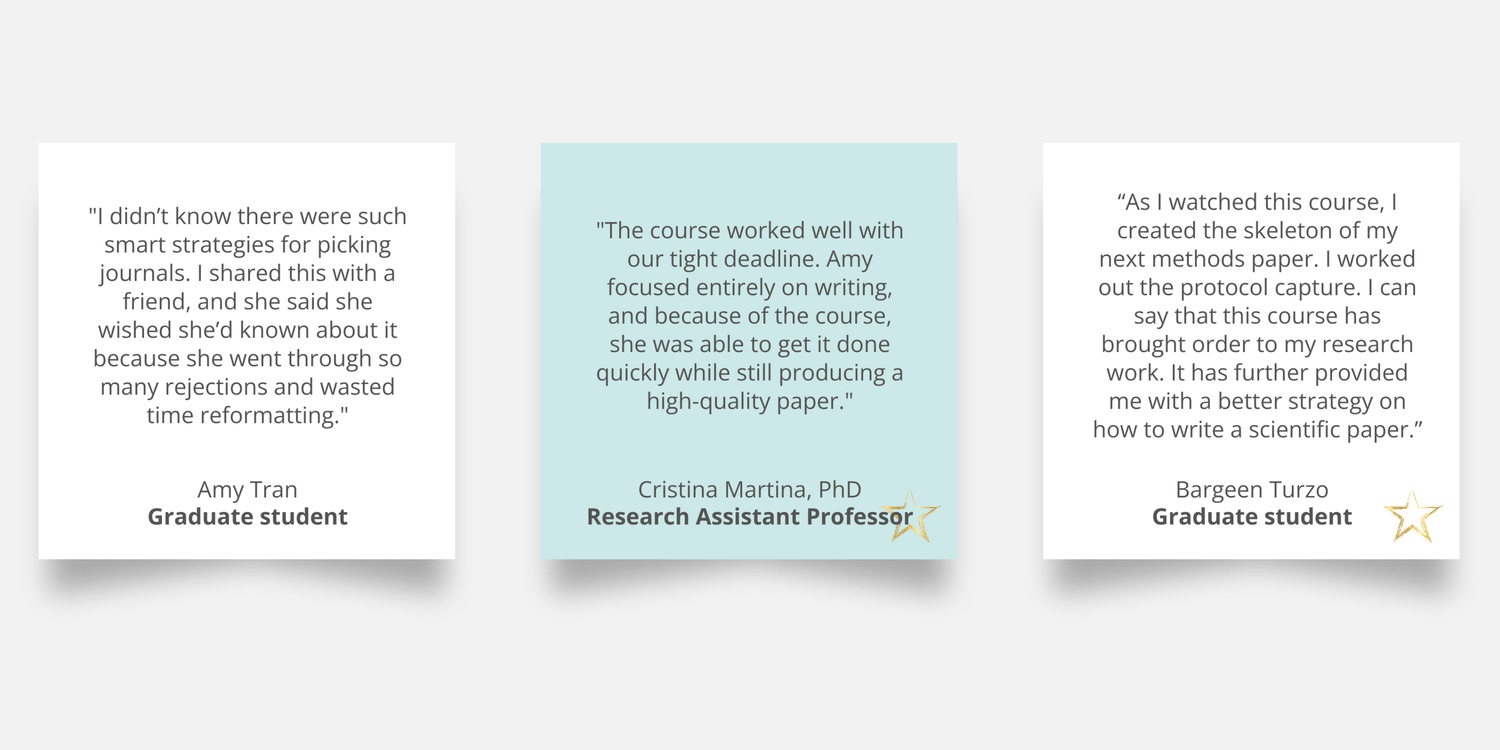
Built from my Zero-To-Published VIP program that's already helped scientists publish faster
These results are from my full VIP program, which uses the same writing system this 6‑week sprint is built on
Trusted by experts at


Pricing & Enrollment
Individual Seat – $625
Join the live 6‑week Manuscript Writing Sprint
Get 3 months of follow‑up Q&A support
Full access to the Zero‑To‑Published Program (lessons, templates, checklists)
You can pay by credit/debit card. Many students and postdocs then get reimbursed by their lab or department. You'll get a receipt you can submit to your PI or admin.
Simple Progress Guarantee:
If you attend the first two workshops (live or recordings), do the worksheets, and don't feel you've made meaningful progress on your manuscript, email me within seven days of Week 2, and I'll refund your seat. No hard feelings. I only want you in the program if it's clearly helping you move your paper forward.
Hey, I'm Julia

Julia Koehler Leman, PhD
Scientist, software engineer
and course creator
I spent more than 17 years as a scientist, software engineer, and biomolecular modeler, where I built methods and systems — the same systems-thinking that now underpins my writing frameworks.
Over that time, I published more than 30 papers (Google Scholar Profile), including several in high-impact journals and some with more than 100 co-authors, so I understand exactly what makes a manuscript high-quality and how to get it there.
After mentoring more than 30 trainees, I kept seeing the same bottleneck: excellent science buried under unclear figures, tangled storylines, and drafts that take far too long to fix. The Manuscript Writing Sprint is the structure I wish I had as a graduate student, so you don’t have to learn writing the hard way, one painful draft at a time.
Trusted by experts at
17+ years experience in scientific writing
15+ years experience in mentoring
30+ trainees helped from high-school students to research scientist
Not sure yet?
Before each cohort begins, I’ll send everyone a short poll with several possible meeting times for the weekly sprint calls. You’ll select all options that work for you, and I’ll schedule the calls at the time that works for the majority of the group.
If none of the options fit your schedule, I’ll move you to the next cohort so you can participate fully.
All calls are recorded, and you’ll get action sheets for each week so you can catch up before the next session. Live is best, but you won’t fall behind if you have to miss one.
Yes. This sprint is for manuscripts based on existing data. You should have a specific project and results you can turn into figures. If you don’t have data yet, it’s better to join a later cohort once your project is ready to write up.
You can pay by credit or debit card. Many students and postdocs then get reimbursed by their lab or department using the receipt.
If your PI or department prefers to pay directly (e.g., via grant or purchase order), you can send them the separate faculty information page so they can arrange payment with me.
Enrollment is first‑come, first‑served. After you sign up, you’ll complete a short intake form so I can confirm you have a project ready to write and match you to the right cohort start date.
If it turns out your project isn’t ready yet (no clear data or question), I’ll recommend a later cohort instead so you get the most out of the sprint.

